• DATE :

The shares of the Adani group of companies fell by 5-25 percent this morning

As all things acquire a lifetime of their own on Twitter verse, so did a news article on the Adani group.


Business journalist Sucheta Dalal was trending this morning after Twitter users attributed a pointy visit shares of Adani group of companies to a tweet by her, hinting at “scandal” involving possible rigging in favour of stock prices of a bunch of companies. Dalal didn’t name any company in her tweet.

Another scandal hard to prove outside the recording machine of knowledge available with SEBI tracking systems is that the return of an operator of the past who is relentlessly rigging prices of 1 group. at some stage in foreign entities! His speciality & that of a former FM. Nothing changes!


The shares of the Adani group  fell by 5-25 percent this morning after the National Securities Depository froze the accounts of three foreign funds that have high stakes within the company.

Economic Times' reasoning for the drop was way more prosaic: the now frozen funds have an investment of Rs 43,500 crore within the Adani group of companies. The accounts were frozen on or before May 31, the report added, possibly thanks to "insufficient disclosure of knowledge regarding beneficial ownership". Consequently, the shares of Adani Enterprises fell by 20 percent, its sharpest fall in 10 years, and Adani Ports by 19 percent


On Twitter, though, the memes and jokes kept coming, connecting these seemingly unconnected events. Sucheta Dalal, for those unfamiliar, is credited with unearthing the 1992 securities scam involving the late Harshad Mehta.


Reliance Infra stake to travel up to 38% from 9%; more fund raising planned

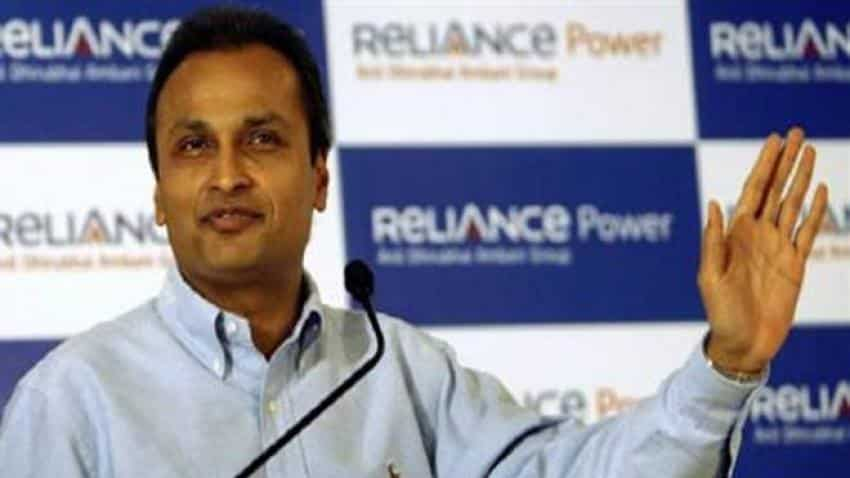
R-power Limited today announced that it'll raise Rs 1,325 crore by issuing preferential shares and warrants to its parent, Reliance Infrastructure. Post conversion, combined stake of Reliance Infrastructure and other promoters will rise from this nine per cent to around 38 per cent.

R-power will issue upto 59.5 crore equity shares and upto 73 crore warrants convertible into equivalent number of equity shares at Rs. 10 each by conversion of debt, to Reliance Infrastructure.

The pricing is at a 21.5 per cent discount to R-Power's share price of Rs 12.74, as per Friday's closing on BSE.

With this, R-power's standalone debt will reduce by Rs 1,325 crore and together with its other planned debt reduction in subsidiaries, its consolidated debt will further fall by Rs 3,200 crore in FY22, which can reduce its debt-equity ratio to 1.80:1, a corporation statement said after its meeting today.

Reliance Infrastructure and other promoter holding in R-power will increase upto 25 per cent after issue of equity shares and can further increase to over 38 per cent on conversion of warrants. As of now, the promoter owns 9.06 per cent stake in R-Power, as per statistics submitted to the stock exchanges for the quarter ending March this year.

The Board in an exceedingly meeting held today also approved plans to issue foreign currency convertible bonds (FCCBs); and raising funds by issuing securities to qualified institutions. The proposed size of FCCB issue is up to 50 per cent of the then networth of the corporate, and QIP's upto 25 per cent of the then networth.


R-power runs power plants supported coal, gas and renewable energy, with an operating portfolio of 5,945 megawatts.

On June 6, the Board of Reliance Infrastructure had announced that it'll vex to Rs 550.56 crore from its promoter, the Anil Ambani family and and Varde Investment. Of this, the Anil Ambani family will invest Rs 400 crore – raising its stake from 5 per cent to 23 per cent while the remainder are going to be invested by Varde Partner for a seven per cent stake. It plans to boost creeping acquisition.

Various Anil Ambani group companies including Reliance Communications and Reliance Naval and Engineering Ltd were dragged to the bankruptcy courts by the Indian lenders after they did not repay their debt. While Mukesh Ambani’s Reliance Industries has emerged because the highest bidder for Reliance Infratel, a subsidiary of Reliance Communications, UV Arc has emerged because the highest bidder for Reliance Communications.

The RBI later clarified that asset reconstruction companies cannot bid for companies within the bankruptcy courts and also the offer by UV ARC is currently pending. Reliance Naval did not find any buyers despite breaching deadlines set under the IBC.Reliance Infra stake to travel up to 38% from 9%; more fund raising planned


R-power Limited today announced that it'll raise Rs 1,325 crore by issuing preferential shares and warrants to its parent, Reliance Infrastructure. Post conversion, combined stake of Reliance Infrastructure and other promoters will rise from this nine per cent to around 38 per cent.

R-power will issue upto 59.5 crore equity shares and upto 73 crore warrants convertible into equivalent number of equity shares at Rs. 10 each by conversion of debt, to Reliance Infrastructure.

The pricing is at a 21.5 per cent discount to R-power's share price of Rs 12.74, as per Friday's closing on BSE.

With this, R-power's standalone debt will reduce by Rs 1,325 crore and together with its other planned debt reduction in subsidiaries, its consolidated debt will further fall by Rs 3,200 crore in FY22, which can reduce its debt-equity ratio to 1.80:1, a corporation statement said after its meeting today.

Reliance Infrastructure and other promoter holding in R-power will increase upto 25 per cent after issue of equity shares and can further increase to over 38 per cent on conversion of warrants. As of now, the promoter owns 9.06 per cent stake in R-power, as per statistics submitted to the stock exchanges for the quarter ending March this year.

The Board in an exceedingly meeting held today also approved plans to issue foreign currency convertible bonds (FCCBs); and raising funds by issuing securities to qualified institutions. The proposed size of FCCB issue is up to 50 per cent of the then networth of the corporate, and QIP's upto 25 per cent of the then networth.


Flat 7% off||Planet Fashion - Digital Voucher


 Adani Stock Crash The shares of Adani group companies saw a fall of 5 to 18 percent on Monday. A report said that the National Securities Depository Limited (NSDL) has frozen the accounts of three foreign funds.


New Delhi, Business Desk. Shares of Adani group companies saw a fall of 5 to 18 percent on Monday. Shares of group companies fell after a report in the Economic Times. It has been said in this report that National Securities Depository Limited (NSDL) has frozen the accounts of three foreign funds. These funds have invested a total of Rs 435 billion in Adani Group companies.On Monday, Adani Enterprises Share Price and Adani Ports Stock Price listed in Nifty 50 saw the biggest break of 15-15 percent in early trade. At 10:35 am, the price of one share of Adani Enterprises was down 20.70 percent at Rs 1,270 per share.


Quoting an official, it has been said in this report that NSDL has taken this step due to lack of sufficient documents related to Beneficial Ownership.


Domestic stock markets also declined on Monday due to the breakdown of Adani Group companies. Along with this, the effect of the data related to the inflation rate to be released on Monday was also seen on the market.


Earlier last week, Sensex and Nifty closed at record high levels. This rally was seen in the stock markets due to the strengthening of expectations of economic recovery after the lifting of restrictions related to Kovid-19 in many states of the country.


BSE Sensex was trending at the level of 52,199.25, breaking 275.51 points at 11:28 am. Similarly, NSE Nifty was down 95.75 points and was trending at the level of 15,703.60.


SBI, Kotak Mahindra Bank, HDFC, Maruti, ICICI Bank, HDFC Bank, NTPC and M&M were the biggest losers on the Sensex.


Up to 65% Off on Speakers & Other Electronics


 Top Stocks to Investment Today: If you are confused about investing in the stock market, then a better way is to keep an eye on the stocks in which the brokerage has advised to buy. In this way, every day of the legendary brokerage house choose the shares of their choice.


Top Stocks to Investment Today:

If you are confused about investing in the stock market, then a better way is to keep an eye on the stocks in which the brokerage has advised to buy. In this way, every day of the legendary brokerage house choose the shares of their choice. The brokerage house keeps an eye on these things as to why that stock is rising or falling. How the performance of the company can be going forward, there is no speculation associated with the stock. On the basis of all these things, they give their report.If you are also looking for some such stocks, then know which stocks are being advised by the leading brokerage houses to invest in today. We have listed some stocks here with market analyst Ashish Chaturvedi,


Bajaj Finance

Bank of America has given buy advice in Bajaj Finance. For this the target of the share has been fixed at Rs 6290. The stock had closed at Rs 6110 on Thursday. It has been said in the report that the impact of lockdown on the company has reduced. The business of the company is expected to pick up from June.


HDFC Bank

Jefferies has given investment advice in HDFC Bank and the target has been fixed at Rs 1860. The bank's stock closed at Rs 1443 on Thursday. It has been said in the report that unlocking will accelerate the business of the bank. 19 per cent CAGR growth in profits is possible during FY21-24. Faster growth is expected in the SME loan segment going forward.


Asian Paints

Outperform is rated by Macquarie, a brokerage house in Asian Paints. Giving investment advice, a target of Rs 3200 has been set. The stock had closed at Rs 2956 on Thursday. According to the report, prices will increase in the wood finish segment from June 24. Along with this, prices are also expected to increase in the decorative segment.


JSW Steel

Morgan Stanley has given a buy advice on JSW Steel giving an overweight rating. The target for the stock has been fixed at Rs 920. According to the report, there is recovery in both production and sales of the company.


divi's lab

Brokerage house Macquarie has given outperform rating in Device Lab. The brokerage has given buy advice in the stock and the target has been fixed at Rs 4806.


Tata Consumer

Brokerage House Nomura has fixed a target of Rs 825 while giving Buying advice in Tata Consumer. According to the report, the sale of packaged food will increase in Unlock. The EPS estimate for FY22-23 has increased by 2 to 3 per cent. Profits have been supported by the packaged food business.


The story of Reliance 
and therefore the mangoes dates back to the late nineties. within the year 1997, the corporate was lingering on the priority of big pollution being caused at its refinery in Jamnagar.


After receiving several warnings from the Pollution Control Boards, Reliance realized that some measures were needed to be found out to resolve that problem.


It’s only then that Reliance introduced the thought of making a mango orchard near the refinery to curb the pollution levels.


The wastelands near the Jamnagar refinery of Reliance were then converted into a green belt, and around 1.3 lakh plants of mangoes of over 200 species were planted there.


The orchard was named Dhirubhai Ambani Lakhibag Amrayee, after the founding father of Reliance Industries, Dhirubhai Ambani.


The name of Reliance’s orchard was inspired by the mango orchard created by Mughal Emperor Akbar within the 16th century which is termed Lakhibag, located at Darbhanga in Bihar.


More About The Mango Orchard

Reliance’s problem-saving orchard is spread in a very land of 600 acres. The water for the massive green belt comes from the company’s desalination plant that purifies the seawater.


As the orchard’s area is large and also the problems with water scarcity and arid land persists, so to address it, appropriate technologies like water harvesting and drip irrigation method together with simultaneous fertilization are used.

“Apart from major Indian varieties like Kesar, Alphonso, Ratna, Sindhu, Neelam, and Amrapali, we even have foreign ones like Tommy Atkins and Kent from Florida, US, and Lily, Keitt, and Maya from Israel.” a corporation spokesperson said.

Every year, Dhirubhai Ambani Lakhibag Amrayee produces about 127 types of mangoes of fantastic quality which are sold locally furthermore as exported globally.

***********************************************************************************


“Reliance encourages farmers to go to its orchard and learn from the innovative practices getting used there. It also distributes 1 lakh free saplings to farmers every year”, says Parimal Nathwani, who was a detailed confidant of Dhirubhai Ambani.


How the decision-makers of Reliance made their answer of issues is innovative, inspiring, and eco-friendly too.


In few years, the wastelands were transformed into the luxurious green countryside and therefore the world’s largest refinery at Jamnagar, Gujarat was saved by its environment-friendly counterpart; the mango orchard.

It’s a chocolate coated wafer biscuit.


Will courts 
have to get culinary consultants? one in all the implications of the new goods and services tax (GST) regime has been an enormous increase in questions on the classification of varied products so as to see the slab relevant to them.


A lot of those questions appear to relate to food, reflecting the complexity of the many food products and therefore the proven fact that they're made with ingredients that may have multiple uses, as food or medicine or cosmetic or maybe for industrial use. As Congress leader Veerappa Moily asked within the debates over GST: “Is KitKat a chocolate or a biscuit? Is oil considered a toiletries or a cooking oil?”


As a plea for more care to be taken in categorisation, this was fair; as an argument for avoiding GST, it was not. Because food has always involved problems with classification. Partly this can be because we use food products in such a big amount of other ways, but partly too it comes right down to a philosophical issue.


The judge who heard the case decided that just the name ‘Jaffa Cake’ was irrelevant, so McVitie’s had to prove that it had been actually a cake and not a biscuit


A product might need an identity in itself, but it also has an identity in how we use it, which use creates the worth on which this sort of tax is enforced. And this process is probably at its most elemental when it involves eating. An fruit tree produces fruit to propagate more apple trees, but after we pick and eat the apple, or sell it to be eaten, or make it into apple pies to sell at a good higher price, we add value and now are taxed on that.


But the matter this raises is seen within the saga of the Jaffa Cake. this is often a snack within the UK, product of a spongy base topped with orange jelly and chocolate coating to carry it beatit absolutely was introduced by McVitie’s, a British biscuit manufacturer, in 1927, taking its name from the oranges that were famously exported from Jaffa in what's now Israel. 


Jaffa Cakes celebrated the delicious pairing of chocolate and oranges and have become one in all the foremost popular snacks within the UK. So, in 1991 it wasn’t surprising that McVite’s challenged Her Majesty’s Revenue and Customs (HMRC) over an issue arising from a change within the excise tax rules. even as GST is doing now, VAT charged little or nothing on necessities, but a high rate on luxuries.


In a motivating reflection on British priorities, cakes were considered a necessity, but chocolate-covered biscuits a luxury. HMRC said they were the latter and demanded their dues. McVitie’s said they were the previous and visited court to avoid paying the tax. HMRC discovered that Jaffa Cakes appeared like biscuits, were stocked in shops alongside biscuits and were eaten like biscuits.


The judge who heard the case decided that just the name ‘Jaffa Cake’ was irrelevant so McVitie’s had to prove that it had been actually a cake and not a biscuit. to assist this they'd a large Jaffa Cake made as an actual cake, but the important clincher came from simply leaving the products unpacked for some days. Jaffa Cakes got staler and harder, but biscuits got soft. The judge accepted the argument that going stale, but not soft, was the sign of a cake not a biscuit, and McVitie’s won.


The case became famous, quite possibly because tax accountants realised that Jaffa Cakes were a more attractive advertisement for his or her skills, instead of the standard rules and regulations. It led to further challenges, as an example from Marks & Spencer over an analogous teacake (M&S won).


A more audacious challenge came from Procter & Gamble (P&G). Their Pringles chips weren’t 
made up of thinly sliced potatoes, but from a potato and flour dough extruded into cylinders and cut and fried into perfect round chips. P&G argued that the flour meant that the chips was actually a sort of cake. The judge didn’t buy this reasoning – chips are chips and cakes are cakes, and P&G lost.


Such attempts at creative categorisation return centuries. From early, the older Christian churches decreed days of fasting to recollect the sacrifice made by prophet. The fasts became days of abstinence from meat, which was understood to come back from warm-blooded animals. Fish, being cold-blooded, wasn't considered meat, an attitude that also causes problems for Indian vegetarians while eating in Europe.


(Cold-blooded reptiles were also allowed, but few people wanted to eat them.) within the 17th century, a bishop of Quebec made a motivating extension to the current idea. Canada had many beavers, which swam in water like fish, in order that they could now be counted as fish, and hence eaten on fast days. South American clergymen made an identical dispensation for capybaras, another reasonably semi-aquatic rodent.


Perhaps the foremost startling interpretation came with laurices, the foetuses of rabbits. When harvested before actual birth, they were seen as still ‘swimming’ in humour, and hence were considered a sort of fish. an analogous reasonably convenient characterisation was seen in Indian havelis, where strict rules of vegetarian purity were got around by eggs being recorded within the account books as ‘white potatoes’ and chicken as ‘moving vegetables’.

New Delhi: If you're attending to earn well this month then you've got an honest chance. From day to 16, you'll be able to make huge profits. Shyam Metalics and Energy Ltd., a Kolkata based steel manufacturing company, is providing you with this chanceallow us to tell you that the corporate is coming with its IPO, through which investors can earn good money. allow us to tell you ways you'll be able to invest money.

Let us tell you that the corporate is progressing to raise Rs 1107 crore through this IPO. If this IPO are launched on 14th June, then you'll be able to invest money in it from 14th to 16th. At the identical time, the bidding for anchor investors will open on June 11.


How many shares will the corporate issue?

According to the news of cash Control, in step with the draft red herring prospectus (DRHP) of the corporate submitted with the market regulator SEBI, for this public issue, the corporate will issue fresh equity shares of Rs 657 crore, while the promoters and existing investors of the corporate offer for Rs. Will issue shares worth Rs 450 crore through SAIL (OFS).


Where will the funds be used?

the corporate will use Rs 657 crore raised through the IPO to repay the debt of itself and its associate company SSPL.

> Shyam Metalics has appointed ICICI Securities, Axis Capital, IIFL Securities, JM Financial and SBI Capital as its lead managers for this IPO.


How is that the business of the corporate

Talking about the business of the corporatethe corporate has established a team of 42 distributors in 13 states and one union territory. it's a complete of three factories at Sambalpur in Odisha and Jamuria and Mangalpur in West Bengal.


How much is that the debt on the company?

Apart from this, the full debt on the corporate is Rs 381.12 crore. At the identical time, its associate company had a debt of Rs 398.60 crore. the overall debt on the corporate is Rs 886.28 crore.


How much profit

>> the whole revenue of the corporate was Rs 3933.08 crore till the December quarter of the twelvemonth 2020-21.

>> the entire revenue of the corporate during this period last year was Rs 3283.09 crore.

>> Shyam Metalics had a net of Rs 456.32 crore within the December quarter.

>> The company's income within the last twelvemonth Q3 was only Rs 260.36 crore.